How to Stop Translating for Your Head When You Dey Speak
Learn to respond directly for your target language wit useful phrases, timed answers, inner monologue, and practical AI conversations.
You understand the question. You know the words wey you want use. But before you answer, your mind go build the sentence for your first language, translate am piece by piece, check the grammar, and only then allow you speak.
Dat process normal, especially for beginning. Translation help you connect unfamiliar words to ideas wey you already understand. The problem show when e remain the only route to speaking. Conversations move quickly, and translating every sentence fit create long pauses, unnatural word choices, and unnecessary pressure.
The goal no be to ban translation from your mind. E be to build faster route from meaning to the language wey you dey learn.
Learn complete phrases, no sentence ingredients
If you learn every word separately, you go assemble each sentence while speaking. Useful phrases give you ready-made patterns wey already contain vocabulary, grammar, and context.
Instead of memorizing only the word “opinion,” practice:
- “For my opinion…”
- “I get different opinion.”
- “Wetin be your opinion about…?”
- “I never form opinion yet.”
You fit then replace one part of familiar pattern instead of constructing the whole sentence from scratch. “I never form opinion yet” fit become “I never make decision yet” or “I never choose date yet.”
Collect phrases from situations wey you actually encounter. Short list for meetings, travel, introductions, or everyday errands go be more useful than hundreds of unrelated expressions.
Connect words directly to meaning
When possible, connect new expression to image, action, feeling, or situation rather than only to im translation.
If you dey learn the word for “umbrella,” picture yourself opening one for rain. If you dey learn how to say “I dey run late,” imagine sending dat message while hurrying to appointment. Say the expression aloud while holding the situation for mind.
Dis no require abandoning bilingual dictionaries. Use translation to understand the expression, then add examples wey show when and how people use am. The examples help the new language develop im own network of meaning.
Describe the word wey you no fit remember
Learners often stop speaking when one important word disappear. For real conversation, however, you fit usually explain around am.
If you forget “receipt,” you fit say:
- “The paper wey the shop give you after you pay.”
- “The document wey show wetin I buy.”
- “I need am if I want return something.”
Dis skill sometimes dem call circumlocution. E keep the conversation moving and train you to work wit the language wey you already get. E also more useful than immediately switching languages or reaching for dictionary.
Turn am into game: choose ordinary object and explain am without saying im name. Ask conversation partner to guess wetin e be.
Practice answers wit time limit
Translation grow when you give yourself unlimited planning time. Gentle time pressure teach you to choose familiar language quickly.
Prepare five everyday questions, like:
- Wetin you do dis morning?
- Wetin kind food you enjoy?
- Wetin you dey work on dis week?
- Where you go like travel?
- Wetin be the last film wey you watch?
Give yourself five seconds to begin each answer, then speak for thirty seconds without restarting. Your answer no need be sophisticated. Clear sentence wey begin promptly more valuable than perfect sentence wey never leave your head.
Repeat the same questions several days later. You go often notice say the opening phrases arrive faster and say your answers become easier to extend.
Build short inner monologue
Your inner voice dey available all day, so use small part of am for your target language. Start wit moments wey predictable and repetitive.
While preparing breakfast, think:
- “I need clean cup.”
- “Coffee no remain much.”
- “I go eat before I leave.”
While planning your day, ask:
- “Wetin I suppose do first?”
- “How long dis go take?”
- “I fit finish am before lunch?”
No attempt to translate every thought wey you get. Choose one routine or five minutes of your day. Small, repeatable practice create less frustration and give the same expressions many chances to become automatic.
If speaking never part of your schedule yet, first try building simple daily speaking routine. Regular practice matter more than making one session unusually long.
Keep grammar simple while you build speed
Trying to use your most advanced grammar for every answer fit send you back into translation mode. Use structures wey you control well, then add complexity gradually.
Suppose you want explain why you start learning language. Begin wit:
“I start to learn am because I move to new country.”
Once dat feel comfortable, expand am:
“I don want to learn am for years, but I start to practice seriously after I move.”
Both answers communicate the idea. The simpler one no be failure; e na stable foundation. Fluency grow when reliable language become easy enough say your attention fit move to the next idea.
Use AI conversations to practice spontaneous responses
To know wetin to study easier than to create realistic moment wey you must respond. AI conversation partner fit provide dat moment whenever you get few minutes.
Give the conversation specific situation and useful constraint:
- “Role-play friendly conversation wit new colleague. Ask one question at a time.”
- “Pretend I dey check into hotel. No translate unless I ask.”
- “Discuss weekend plans wit me using language suitable for my level.”
- “Give me five seconds to answer before offering hint.”
- “After the conversation, show me three phrases wey I fit reuse.”
- “Role-play call-center interview and evaluate my clarity.”
Ask for feedback after complete answer or at the end of the conversation. Constant interruption fit make you monitor every word and translate even more. Let the interaction flow first, then review the patterns wey go make your speech clearer.
Review one source of hesitation
No every pause come from mental translation. Sometimes you lack vocabulary, no fit retrieve familiar phrase, or you no sure about grammar pattern.
After conversation, choose one moment of hesitation and ask:
- Wetin idea I dey try express?
- I know the words but retrieve dem too slowly?
- I dey translate phrase wey get different natural form?
- I fit express the same idea more simply?
- Wetin complete phrase I suppose practice next?
Record the improved phrase and use am for two new sentences. Dis turn frustrating pause into material for your next practice session.
Try seven-day think-directly challenge
Use dis plan for one week. Keep each activity between five and fifteen minutes.
| Day | Activity | Main goal |
|---|---|---|
| Monday | Narrate part of your morning routine | Connect language to actions |
| Tuesday | Describe five objects without naming dem | Explain around missing words |
| Wednesday | Answer five questions wit five-second limit | Begin speaking promptly |
| Thursday | Reuse ten phrases from familiar situation | Retrieve complete patterns |
| Friday | Hold AI role-play conversation | Respond spontaneously |
| Saturday | Repeat Wednesday questions | Notice faster retrieval |
| Sunday | Review three moments of hesitation | Choose phrases for next week |
No judge the week by whether you avoid translation completely. Look for smaller signs: you start answer sooner, familiar phrase appear without effort, or you explain idea despite forgetting word.
Measure progress by wetin you fit do
“Thinking for language” fit feel vague and impossible to measure. Focus instead on observable abilities:
- You fit answer familiar question without preparing the sentence for another language?
- You fit speak for one minute using mostly familiar patterns?
- You fit explain forgotten word?
- You fit notice and correct unnatural translated phrase?
- You fit remain for conversation when you make mistake?
Dese na practical signs say the route between meaning and speech dey become faster.
Practice thinking and responding wit Liplip
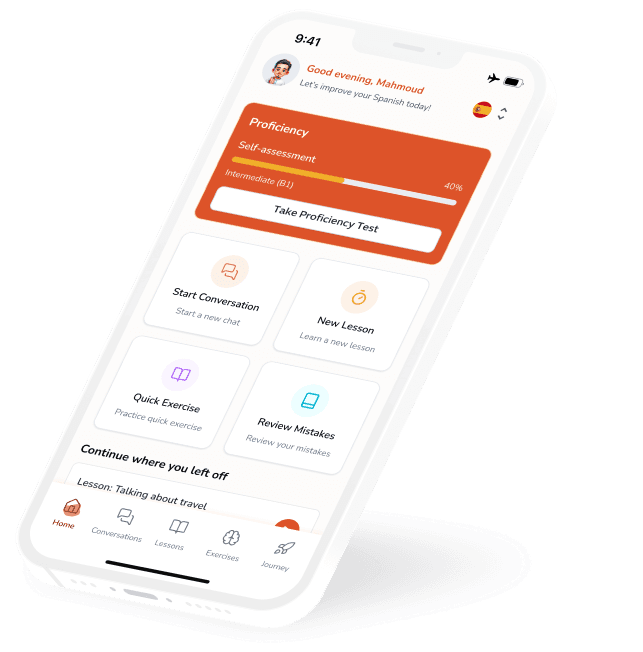
Liplip give you realistic AI conversations, lessons, and exercises adapted to your level and goals. You fit rehearse specific situation, practice answering without translation, and receive focused feedback on the phrases wey slow you down.
Start conversation wit Liplip and give yourself few minutes each day to respond directly, imperfectly, and wit growing confidence.